Lifecycle email is product work. It just arrives in an inbox.
Alder & Ash Copyworks is a small Brooklyn studio that writes onboarding, trial-to-paid and win-back sequences for B2B software, and nothing else. Each email gets treated the way your team treats a feature: it has one job, a trigger, and a test.
Margin noteThe first draft of this headline ended in an exclamation mark. It was rewritten under house rule three.
- Writes
- Lifecycle email, only
- For
- B2B software with a trial or freemium plan
- Written for
- Customer.io, HubSpot, Intercom, Braze, Loops
- Desk
- 574 Jefferson Ave, Brooklyn, NY 11221
- Hours
- Weekdays 8am–5pm
Alder burns fast. Ash burns long.
Two firewoods, picked for the way they behave in a stove. Lifecycle email behaves the same way: some of it has to catch in the first week, and some of it has to keep going for three months.
Nobody here is a woodworker. The name was the shortest honest description of the work we could find, and it stuck because it told clients which sequence they were actually asking for.

Onboarding & trial-to-paid
A short window and one job per email. A trial user decides in the first week whether the product makes sense, so these emails fire off what they’ve done — not what day it is — and then get out of the way.
- Window
- Days 0–14 of the trial
- Ask
- One per email, keyed to activation
- From
- $3,450
Win-back
Thirty to ninety days after someone cancels. No discount in the first email and no guilt in any of them. It tells the people who left over a specific thing that the thing has changed, then waits.
- Window
- Days 30–90 after cancel
- Ask
- Come back, if it’s fixed
- From
- $2,690
What we turn down
A small studio stays useful by staying narrow. These requests come up most weeks. The answers haven’t changed.
| Asked for | Answer | Why |
|---|---|---|
| Landing pages and homepages | No | Somebody who writes those every day will do it better. We’d rather stay sharp on one channel. |
| Paid ads and social posts | No | A different reader with a different attention span. Not our desk. |
| A brand voice deck | No | Your voice shows up in the emails. A forty-page PDF about it rarely does. |
| In-app messages and push | Sometimes | When they fire inside the sequence we’re writing, they’re written with it. On their own, no. |
| A discount-led win-back | Not first | A discount can sit in email three. Leading with one teaches people that cancelling pays. |
| A countdown on a trial that doesn’t expire | No | If nothing stops working on day 14, the email shouldn’t say it will. |
| Emails on a fixed send calendar | No | Sequences go out on what a user did. “Every Tuesday” is a newsletter. |
After the crossing-out, three things remain: onboarding, trial-to-paid and win-back. If you need one of those, the call is 75 minutes.
Book a call about one of them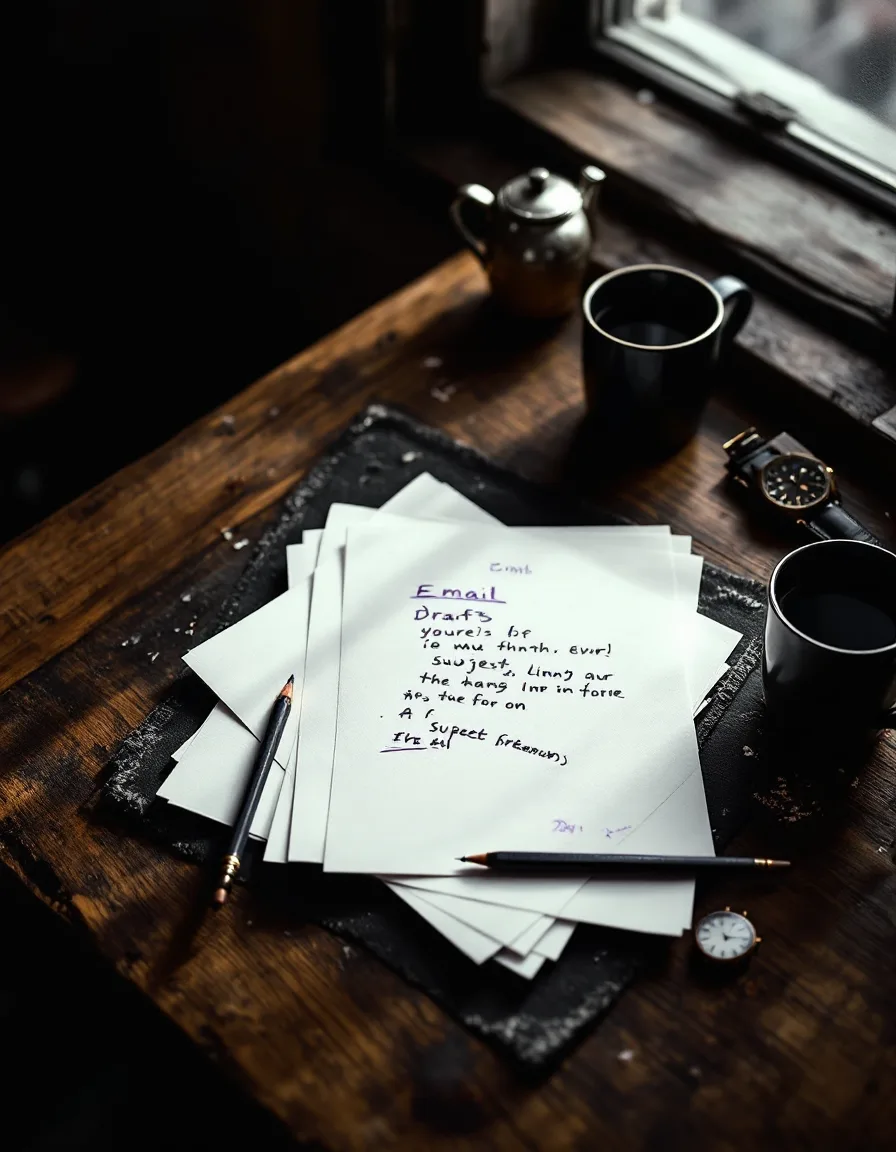
A week at 574 Jefferson Ave
The studio is one room, a long table, and a laser printer that does most of the editing. Every draft is printed, read standing up, and marked in pencil before a word goes back into the doc. Screens are generous with bad sentences. Paper isn’t.
It started out writing whatever software companies asked for — homepages, launch posts, the odd conference booth. The work it kept wanting to redo was the email that arrived after signup. Eventually it stopped taking the rest.
The week runs the same way every week. Calls sit at the front, the middle is quiet, and Friday is for reading numbers from sequences that went out a month ago.
Hours, phone, and how to find the door-
Mon
Calls- 8:00–9:00Inbox, phones on
- 9:00–10:15Strategy call
- 11:00–12:15Strategy call
- 1:00–5:00Plans written up and sent
-
Tue
Calls- 8:00–9:00Inbox, phones on
- 9:00–10:15Strategy call
- 11:00–12:00Plan written up
- 1:00–5:00Drafting
-
Wed
Quiet- 8:00–9:00Inbox
- 9:00–1:00Drafting, no meetings
- 1:30–5:00Printed, read, cut
-
Thu
Builds- 8:00–9:00Inbox
- 9:00–12:00Variants written
- 1:00–5:00Build checks with your team
-
Fri
Reviews- 8:00–9:00Inbox
- 10:00–10:4530-day review
- 11:30–12:1530-day review
- 1:00–5:00Numbers read, rewrites
What you can hold us to
No star ratings, no logo wall. Five things that go into every proposal and get answered for at the 30-day review.
-
If a sequence won’t fix it, you hear that on the call.
Win-back can’t rescue a product nobody changed, and onboarding can’t paper over a broken first screen. You keep the written plan either way, and you don’t pay for a package that wouldn’t help.
-
The voice on the call is the voice in the drafts.
No hand-off to someone new after kickoff. Whoever maps your activation event writes every email and every variant, and is back for the review.
-
Every variant comes with its reason written down.
So a losing test still teaches you something, and the next person to touch the sequence — ours or yours — can read why each line exists.
-
The price is the one printed on the services page.
Per sequence, invoiced half on booking and half on final copy. No hourly meter running in the background, and the two post-review rewrites are already counted in.
-
Drafts on working day ten. Final copy on day fifteen.
Counted from the strategy call. If a date is going to slip, you get an email saying so before it does, with the new date in the first line.
Bring one sequence. We’ll bring the pencil.
Tell us which sequence and roughly how many trials start each month. If it isn’t worth writing yet, the call is where you’ll hear it — and you’ll still leave with the plan.
- A 75-minute strategy call, by video
- Every email written, one tested variant each
- A read of your build before anything sends
- A 45-minute review 30 days after, plus two rewrites
Sequences from $2,690Invoiced half on booking. Weekdays 8am–5pm Eastern, reply within one working day.
Book the strategy call